
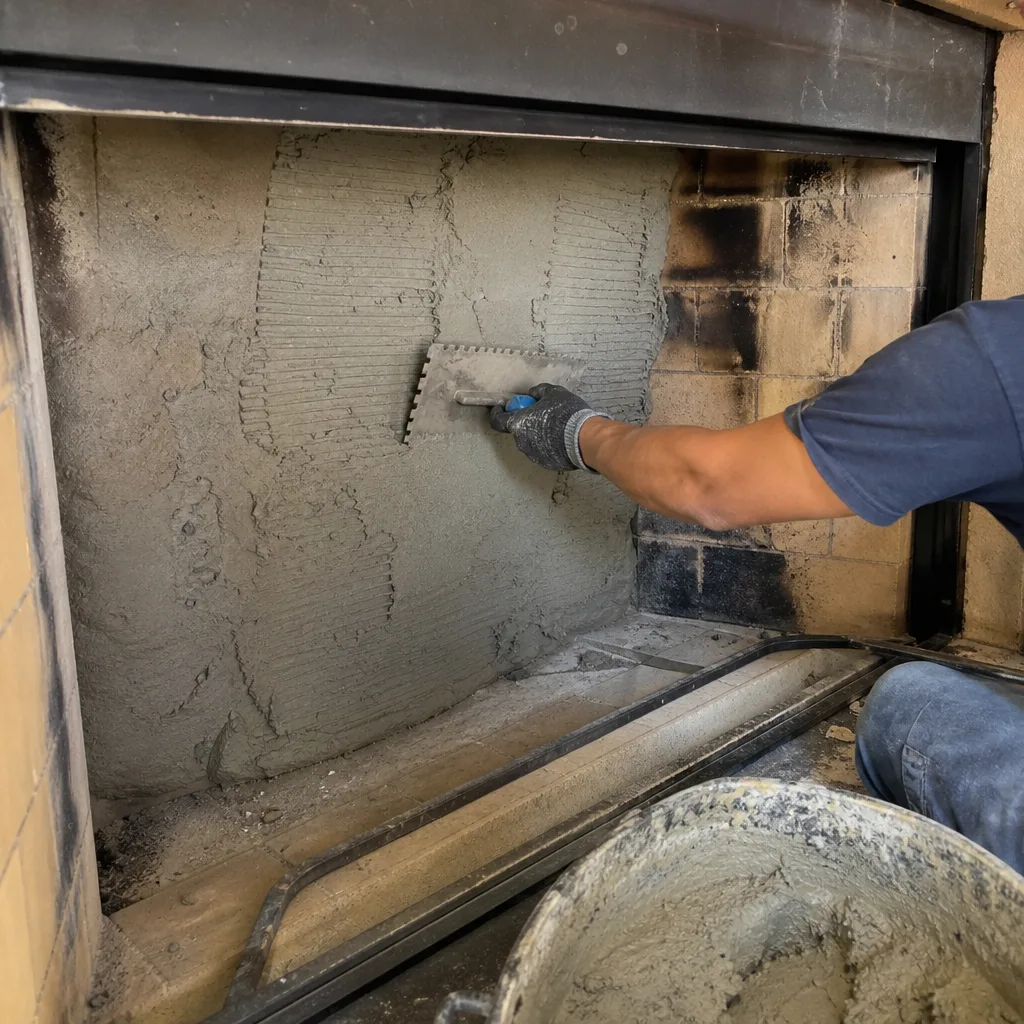
Last updated November 24, 2026
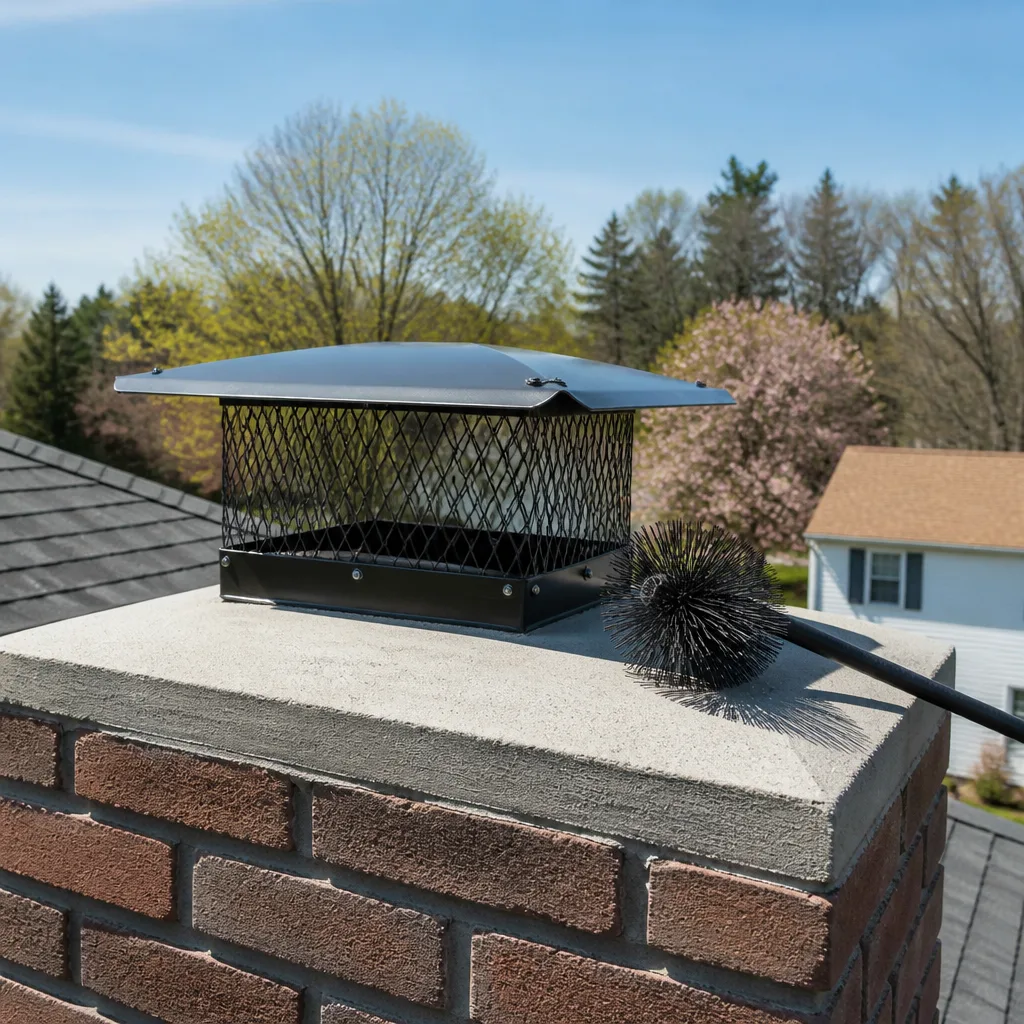 Sweep & inspection
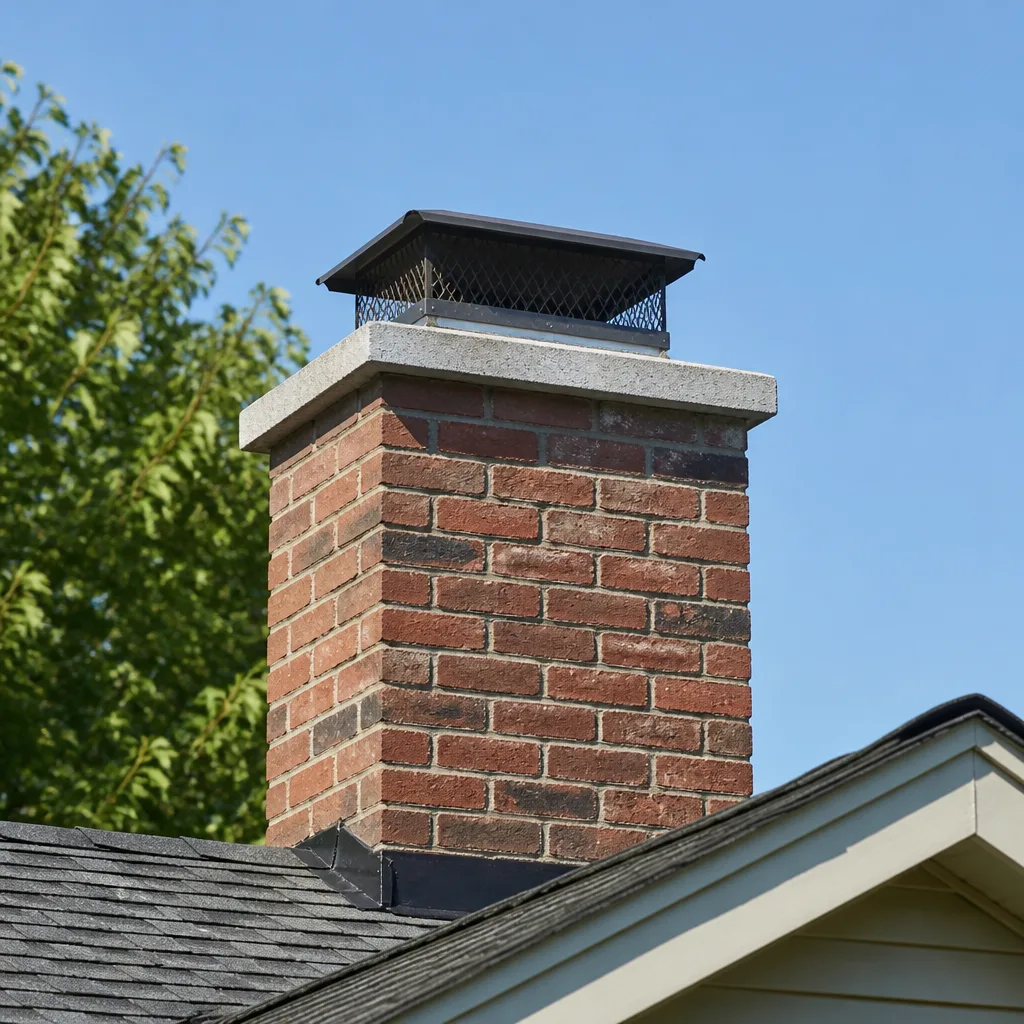 Caps & crowns
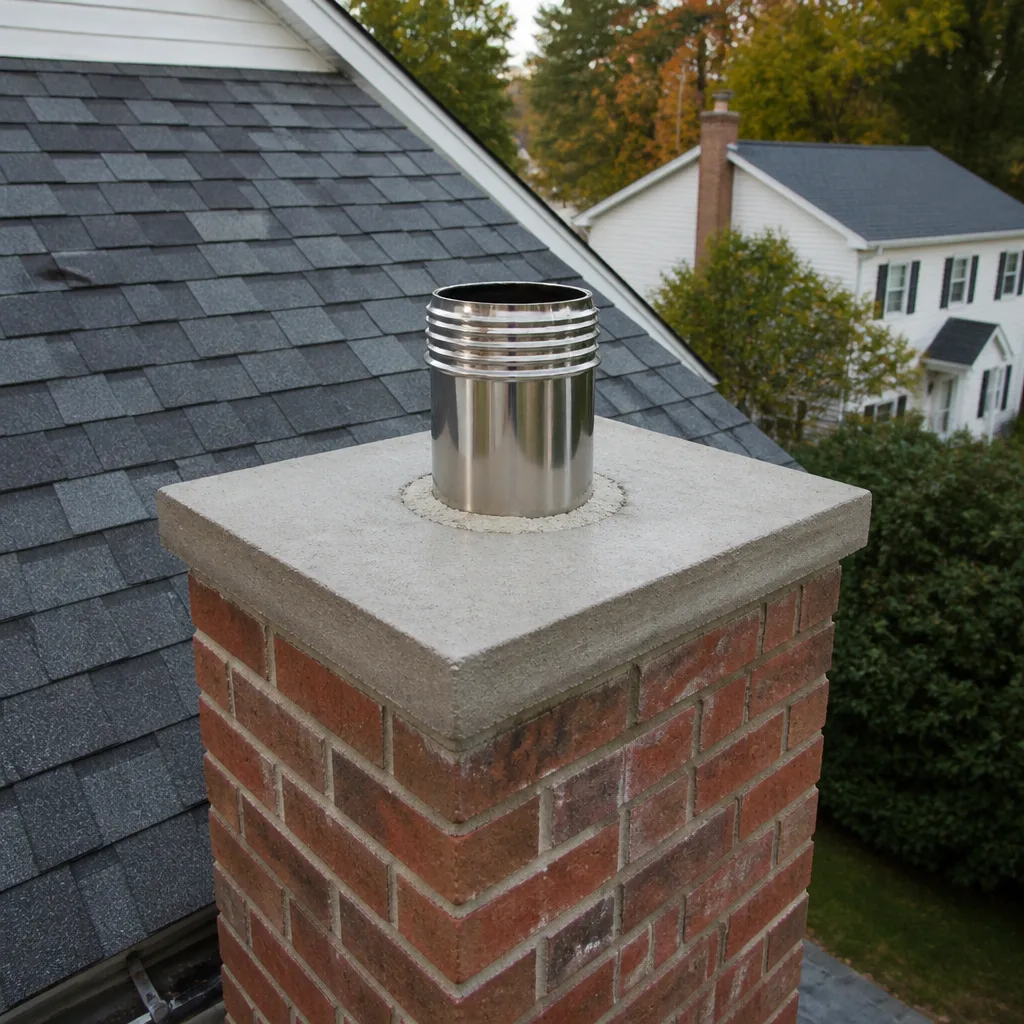 Flue relining
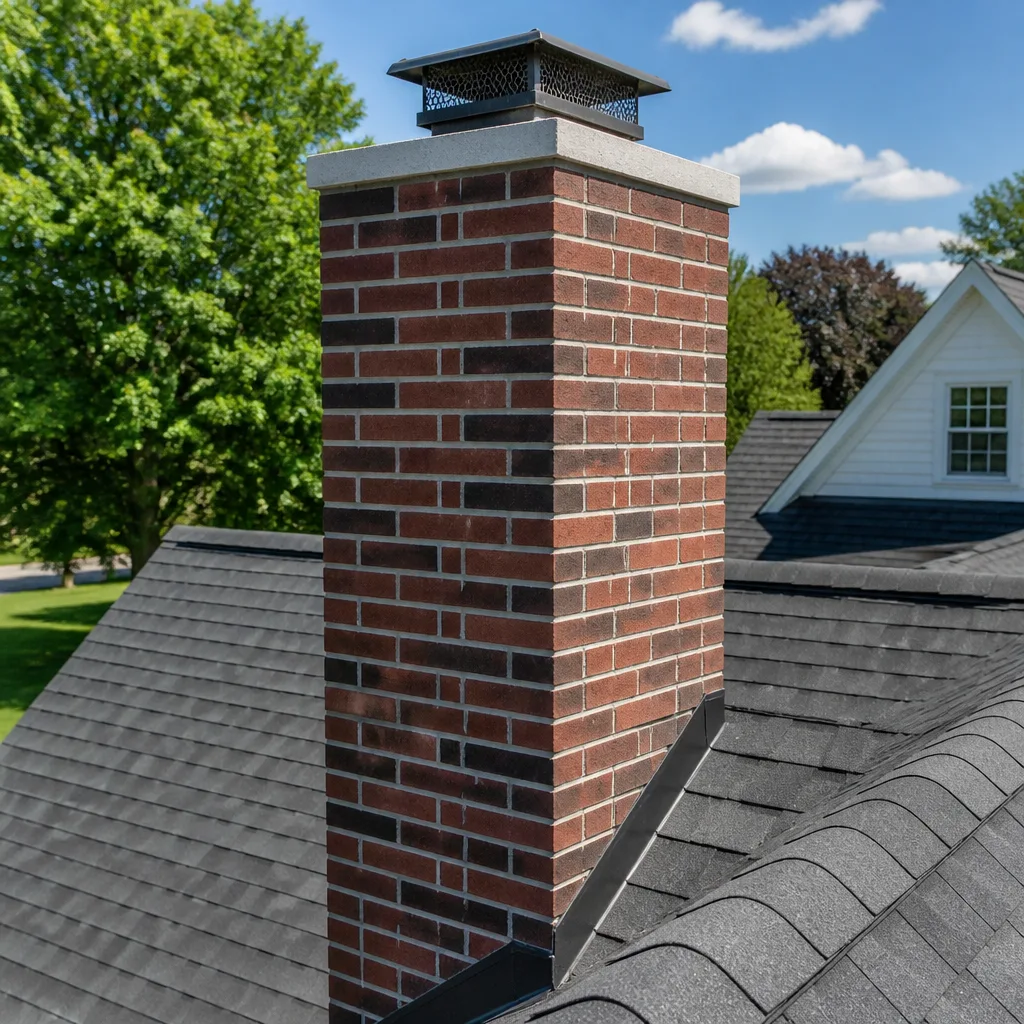 Masonry repair
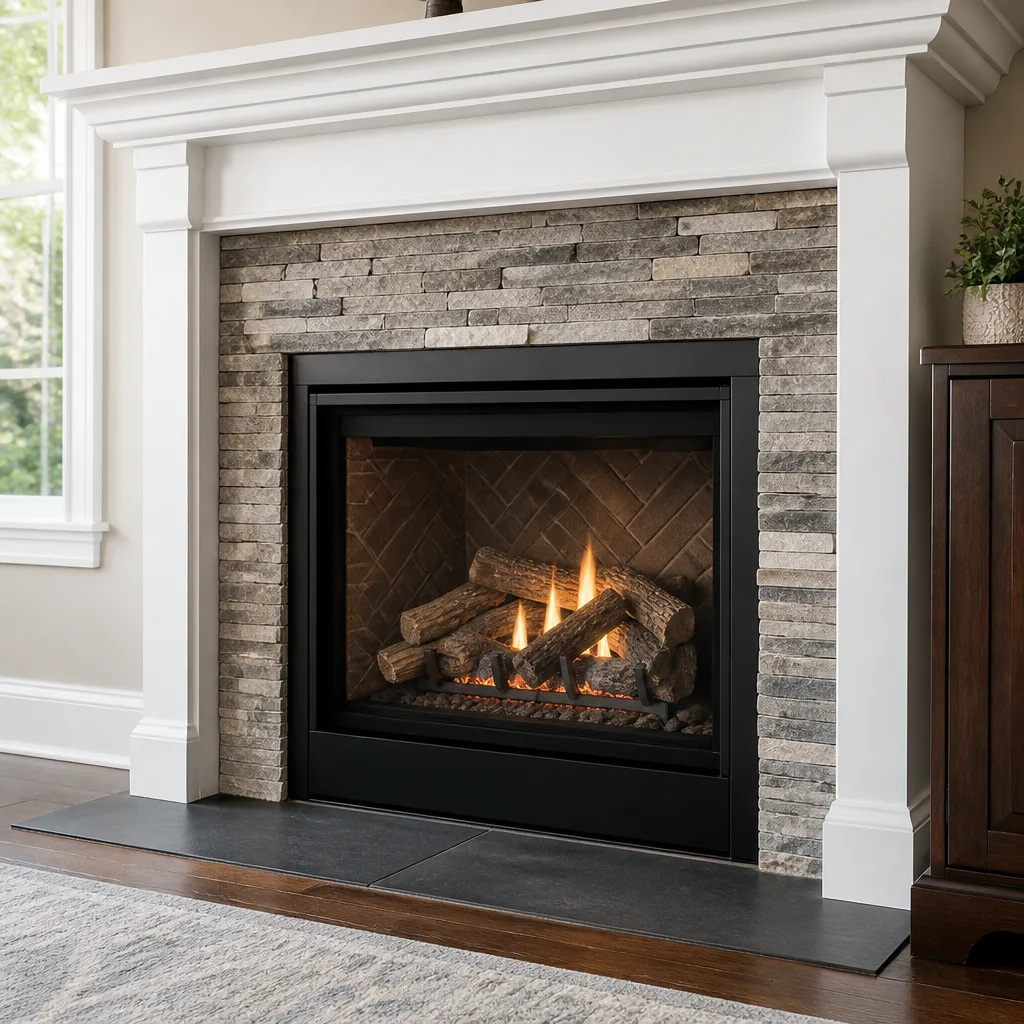 Gas fireplace service
Level 1 sweep and inspection to the NFPA 211 annual standard - flue, crown, cap, and flashing checked and photographed
Chimney sweep logs do not sweep chimneys. They loosen some creosote - which then falls where a brush and vacuum still have to collect it.
The Complete Guide to Chimney Cleaning in East Anaheim
Most East Anaheim homeowners light their fireplace fewer than fifteen times a year. You’d think a low-use chimney needs less attention, not more. The opposite is often true. A chimney that sits idle for months pulls damp air through the flue and holds it there, and the thin creosote that builds up during occasional fires dries into a sticky, glazed film that clings to the tile and won’t brush off like the flaky soot from a hard-working fire. In this guide we’ll walk through what a real cleaning involves in East Anaheim, how the local housing stock and mild climate change the way the job gets done, what the three inspection levels actually mean, and where the line sits between a homeowner’s checklist and work that needs a trained hand.
Quick Answer
A thorough chimney cleaning in East Anaheim means brushing the full flue with correctly sized rotary and hand brushes matched to your flue type, vacuuming the whole system with HEPA-rated containment so nothing escapes into the room, and inspecting the firebox, damper, flue, cap, and crown while the chimney is open and accessible. Most homes here use the fireplace only occasionally, and that low burn frequency tends to produce stickier creosote and more seasonal moisture in the flue than a heavily used chimney sees.
Styles & brands we work with
- Sweep & inspection
- Caps & crowns
- Flue relining
- Masonry repair
- Gas fireplace service
Table of Contents
- Why East Anaheim Chimneys Age Differently
- The Low-Burn Creosote Problem
- Zero-Clearance Fireplaces in East Anaheim Tract Homes
- Level 1, Level 2, and Level 3 Inspections Explained
- What a Professional Cleaning Actually Involves
- Moisture, Caps, and Liner Degradation Between Seasons
- HEPA Containment vs. a Shop Vac
- How Often East Anaheim Chimneys Need Cleaning
Why East Anaheim Chimneys Age Differently
East Anaheim sits in a part of Orange County where the weather stays gentle for most of the year. Winters are mild, so fires get lit for ambiance more than heat. That fact alone reshapes how a chimney ages here. The system doesn’t see the sustained hot burns that keep a flue dry for months at a time, or scoured by a roaring fire so part of what’s on the wall. Fires in East Anaheim are often short and gentle, with a quick light, an hour or two of flame, and then the damper closes on a flue that is still warm and moist inside.
The housing stock adds another layer. Much of East Anaheim was built out during the post-war decades, and the lots are dense. Stucco is everywhere, and many stucco-clad chimneys have a smooth, hard exterior that looks clean from the ground while the inside is doing something different entirely. Stucco also hides cracks in the chimney’s exterior structure, which is one reason an inspection that only looks at the outside isn’t enough.
Local building characteristics we see repeated across East Anaheim include:
- Chimneys shared with the original 1950s and 1960s build-outs, often with clay tile liners.
- Prefabricated zero-clearance fireplaces in tract homes from later decades.
- Chimneys that were retrofitted because a stove was added or a fireplace was converted.
- Stucco caps and crowns that have weathered unevenly under Orange County sun.
None of these are unusual. The point is that a cleaning plan written for a cold-climate house with a heavy burn load doesn’t map cleanly onto an East Anaheim home. The right process here has to account for low burn frequency and the way these particular chimneys are built.
The Low-Burn Creosote Problem
Here’s the counterintuitive part about a rarely used fireplace: it can be nastier inside than one that runs all winter. Creosote forms in stages, and each stage has a different texture and a different removal method. The flaky stage three soot that a regular user builds up brushes out readily. The glazed, tar-like stage doesn’t. And the low-and-slow fire pattern common in East Anaheim produces more of the sticky, glazed kind, because gentle fires don’t burn off the compounds that create hard deposits.
There are three broad creosote types a sweep has to identify before picking tools:
- First degree: light soot and flaky residue, typically removed with a standard brush.
- Second degree: a denser, crusted layer, often requiring rotary brushes and more careful passes.
- Third degree: a glazed, tar-like coating that can be very hard to remove and frequently signals a liner problem underneath.
You can’t tell which stage you’re dealing with from the firebox floor. It takes a visual pass up the flue with a light and a camera. That’s why our inspection service is built into the cleaning rather than sold separately, and why we don’t quote a flat cleaning price over the phone on a chimney we’ve never seen. In our experience, an East Anaheim home that’s been lightly used for years often turns up stage two deposits exactly where you didn’t expect them, usually near the top of the flue where the gas cools fastest.
If a camera inspection turns up third-degree glazing or a damaged tile liner behind it, the repair isn’t something a brush fixes. That’s where liner resurfacing with HeatShield, or relining with a flexible DuraFlex system, becomes the conversation. We’ll get to both below.
Zero-Clearance Fireplaces in East Anaheim Tract Homes
A lot of East Anaheim tract homes have prefabricated zero-clearance fireplaces rather than a masonry unit. These are metal fireboxes set into a framed chase with a listed factory flue, and they need a different approach. The wrong brush size or an aggressive rotary head can damage the thin metal flue. The correct procedure runs the brush with the grain of the listed system’s flue, and it means matching the cleaning method to that specific manufacturer’s requirements.
Zero-clearance units also have their own failure modes that a masonry chimney doesn’t:
- The chase cover and cap assembly can rust or loosen, letting water in.
- The listed flue sections can separate or lose their seal at the joints.
- The firebox panels can crack, which is a fire-safety issue, not a cosmetic one.
- Clearances to combustibles inside the chase can get compromised if something was stored or modified.
Masonry chimneys in the same East Anaheim neighborhood have a different set of needs. The clay tile liner is vulnerable to cracking under thermal stress, and the mortar joints between tiles can fail. The brickwork absorbs moisture, and the crown at the top of the stack cracks over time and lets water into the structure itself. A thorough cleaning on a masonry unit includes noting the state of the crown, because that’s where a lot of water intrusion starts. If the crown is failing, our chimney cap & crown work repairs or replaces it in the same visit rather than leaving you with a second appointment.
The practical takeaway: before any brush touches your chimney, whoever is doing the work needs to know whether it’s masonry or prefabricated, and match the tools to that answer.
Level 1, Level 2, and Level 3 Inspections Explained
The chimney industry recognizes three inspection levels, and knowing which one you need is the difference between a thorough job and a glance. Each level is warranted for a different situation. Here’s how they break down in practice.
Level 1 Inspection
A Level 1 inspection is the visual check of the readily accessible parts of the system: the firebox, damper, the visible portion of the flue, and the exterior of the chimney and cap from the ground or a ladder if it can be reached safely. It’s what typically accompanies a routine cleaning on a chimney with an established history and no recent changes. For an East Anaheim homeowner with a well-maintained masonry fireplace and no changes to the system, this level is usually the right fit.
Level 2 Inspection
Level 2 adds the parts you can’t see with a flashlight. It uses a camera run up the flue to check the liner’s full length, plus access to concealed areas where it’s feasible without destructive work. A Level 2 is called for when:
- The home has been sold or is being sold.
- The fireplace or appliance has been changed or added.
- There’s been a chimney fire or a suspected one.
- The appliance is new to you after a move.
- There’s a performance problem like smoke rollback or poor draft.
Most older East Anaheim homes we look at that have changed hands recently should have had a Level 2, and many never did. The camera inspection catches the tile liner cracks a Level 1 misses.
Level 3 Inspection
Level 3 is invasive. It’s warranted when the concealed areas need to be opened up to reach a problem a lower level can’t resolve, and that’s a decision made when evidence already points to it. In East Anaheim, a Level 3 typically comes up on a chase that’s been modified or a chimney with hidden damage a camera or a strong performance symptom has already flagged.
We approach inspection as part of the job rather than an add-on. If you’re booking a chimney sweep, we bring the assessment with it so nothing hidden gets missed in the shuffle.
What a Professional Cleaning Actually Involves
A real cleaning follows a sequence, not a guess. Here’s the order a thorough cleaning follows in an East Anaheim home.
- Protect the room. Drop cloths on the hearth and floor, and containment over the firebox opening before any tool enters the flue.
- Set up the HEPA vacuum. A HEPA-rated containment unit runs the whole time, pulling air from the room and trapping fine ash before it becomes airborne.
- Inspect first. Light and camera down the flue to identify the liner type, deposit stage, and any obvious cracking before brushing.
- Brush the flue. The brush type and size are chosen from the inspection result: standard brush for masonry, matched brush and method for a listed zero-clearance flue.
- Clean the firebox and damper. Soot on the firebox walls and the damper assembly comes off, and the damper is checked to make sure it opens and closes fully.
- Clean the smoke shelf and smoke chamber. On masonry units, this area collects deposits that brush work needs to reach directly.
- Clear the cap and crown. The screen and cap get cleaned, and the crown gets checked for cracks.
- Photograph and document. Before-and-after photos of the flue interior, along with a written report of anything found.
- Review with the homeowner. We walk you through what we saw, what needs fixing, and what can safely wait.
That last step matters more than it should. A homeowner has no way to verify a claim that the liner needs thousands of dollars of work. We don’t recommend anything you can’t see in the camera footage. If a crack is small and stable, we’ll say so. If it’s something that needs attention this season, we’ll show you why on the monitor.
Moisture, Caps, and Liner Degradation Between Seasons
East Anaheim’s climate isn’t dramatic, but the humidity does something to an idle chimney that a wetter or drier climate wouldn’t. For most of the year the flue is cold and open to outside air through the cap. The marine-influenced humidity that lingers inland doesn’t get burned off by regular fires the way it would in a cold-climate home that runs its stove all winter. The result is a flue that stays mildly damp for weeks at a stretch, and dampness is the one thing a clay tile liner handles worst.
The pathway for moisture intrusion runs like this:
- Rain hits an unsealed or screened cap and runs into the flue.
- Persistent damp infiltrates the clay tile and its mortar joints.
- Repeated wetting and slow drying works the joints open over time.
- A cracked joint lets water reach the surrounding brick and masonry.
- The exterior stucco can show spalling or staining long after the interior problem started.
A properly fitted cap is the first line of defense. The cap keeps rain and animals out while letting gases through, and it’s the piece of chimney hardware most East Anaheim homeowners overlook. A loose or damaged cap does more damage to a liner than a season of fires. When we replace a cap, the products we use are from manufacturers that specialize in top-of-chimney weatherproofing, and the flashing and crown work goes in along with it so the whole assembly stays sealed.
If the liner is already compromised, the repair looks different. HeatShield resurfacing is the right answer for a damaged interior liner that still has its shape, because it rebuilds the flue surface without tearing the chimney apart. For an older or irregular flue where a cast-in-place system doesn’t fit cleanly, a DuraFlex flexible liner handles the shape and the bends. Both approaches are installed by specialists who work with those products routinely.
HEPA Containment vs. a Shop Vac
The single biggest difference between a professional sweep and a homeowner with a shop vac is what happens to the air in the room. A consumer shop vac pulls ash and soot through a filter that lets the finest particles straight back out. Inside a sealed house, that fine ash settles on every surface and stays in the air for hours. You’ll see it on the coffee table the next morning.
A professional HEPA-rated containment system catches the particles at the source. During the cleaning, the vacuum runs continuously, drawing air from the fireplace opening through a HEPA filter that traps the respirable ash before it leaves the unit. The difference shows up in the indoor air quality for days afterward. If you or anyone in the household has asthma or allergies, this matters more than it sounds.
Equipment is where the professional-grade approach separates from a commodity sweep:
- HEPA containment: captures fine ash instead of circulating it.
- Rotary and hand brushes in multiple sizes: correct brush for the flue, not a universal one.
- Camera inspection: sees the whole flue, not just what’s visible from the firebox.
- Correct caps and crowns: products like Gelco and Copperfield caps and weatherproofing components from manufacturers who make them for exactly this purpose.
None of this is exotic. It’s standard for anyone who takes the work seriously. But it’s also why a competent sweep will spend time on the setup and the inspection, not just the brushing.
How Often East Anaheim Chimneys Need Cleaning
The standard rule of thumb is an annual inspection with a cleaning as the inspection dictates, but East Anaheim’s low-burn pattern bends that rule in a specific way. A heavy-user home that fires the fireplace a hundred nights a winter needs the traditional cleaning cadence. A home that fires ten or fifteen times a year over a mild Southern California winter is a different case: cleaning frequency can stretch, but the inspection shouldn’t.
For most East Anaheim homes we recommend:
- Inspection annually, whether or not the chimney fires regularly.
- Sweeping when a camera pass shows deposit accumulation, not on a fixed calendar.
- An early-season check on cap, crown, and flashing before the first fire of the year.
- A post-purchase Level 2 inspection if the home recently changed hands.
The right way to think about it: the cleaning is the part you might delay, and the inspection is the part you shouldn’t. That’s why our inspection runs alongside every service. Getting an honest read on the chimney’s condition is the first step regardless of whether a brush goes up the flue that visit.
For anything across the full system, from the firebox to the crown, we handle it in one place. If the cleaning turns up a problem the firebox side needs attention for, we can take care of that too through fireplace repair without sending you to a second contractor. That continuity matters when the chimney has multiple issues, since it keeps the diagnosis and the fix in the same hands.
Common Mistakes to Avoid
- Hiring on price alone. A cut-rate sweep with a shop vac and a single universal brush will leave the fine ash in the room and miss deposits higher up the flue. The cost of a cheap clean is usually a second clean.
- Burning only soft, resinous wood occasionally. Light, green, or resinous wood in a low-burn fireplace is the fastest route to glazed creosote. Seasoned hardwood produces less of it.
- Ignoring the cap between seasons. Once a cap rusts loose or its screen tears, every cloudy morning sends damp air into the flue. It’s one of the cheapest fixes on the chimney and one of the most commonly deferred.
- Skipping the inspection after a home purchase. East Anaheim has plenty of older homes with liners that were never checked with a camera. A pre-move-in Level 2 inspection should be standard.
- Burning trash or treated wood. Both produce deposits that don’t belong in a flue and can damage the liner chemistry faster than ordinary firewood.
- Assuming low use means low maintenance. A rarely used fireplace in a mild climate traps moisture longer than a heavily used one in a cold climate. Frequent moisture is harder on a liner than frequent fire.
- Trying to remove glazed creosote with a homeowner brush kit. Third-degree deposits don’t brush off, and a homeowner scraping at them can crack the tile liner without realizing it.
See the difference
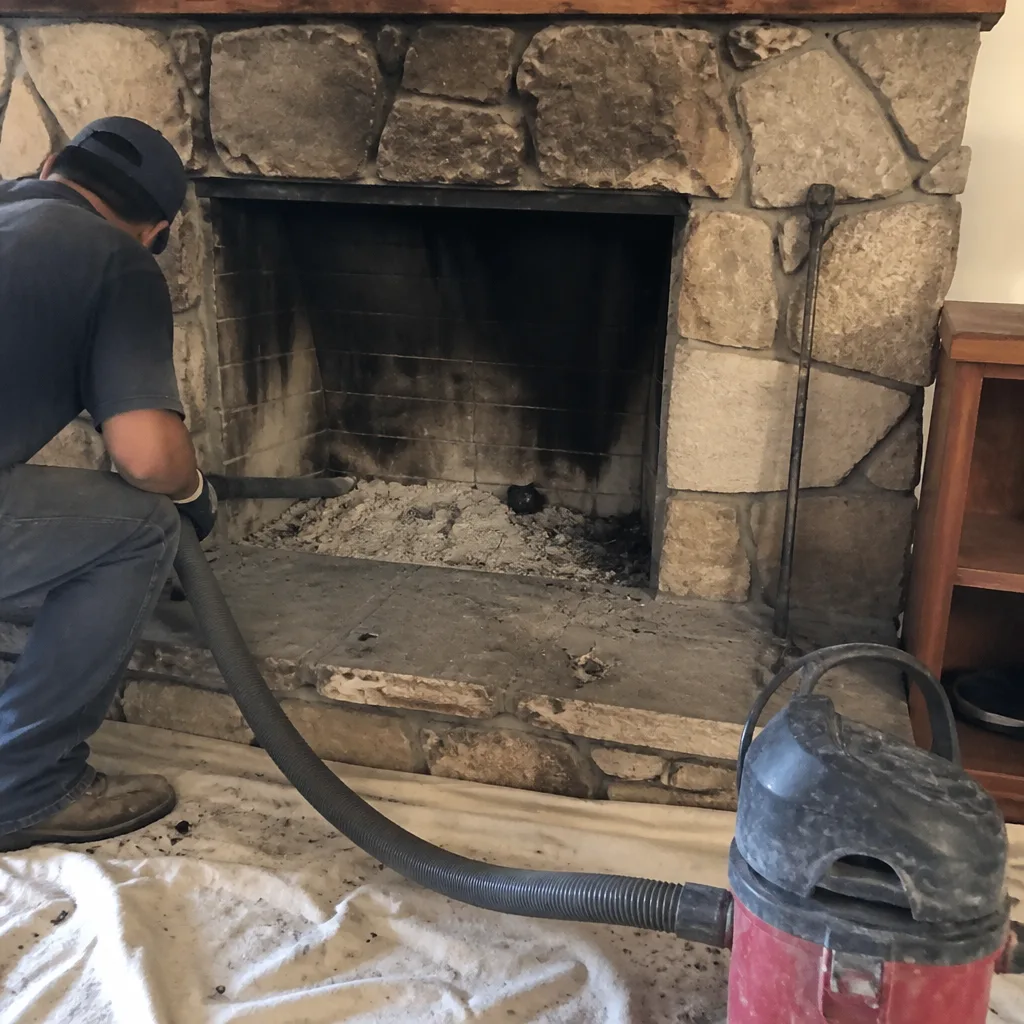 Before
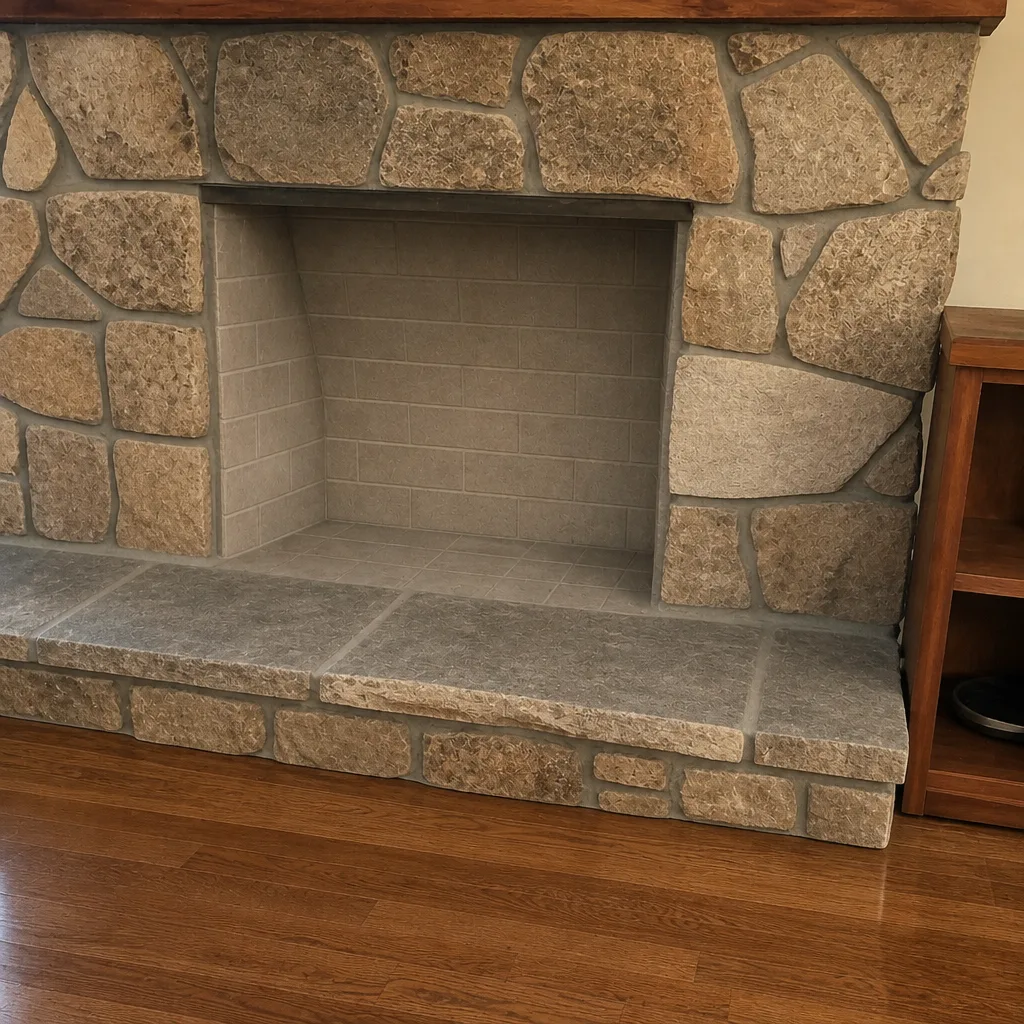 After
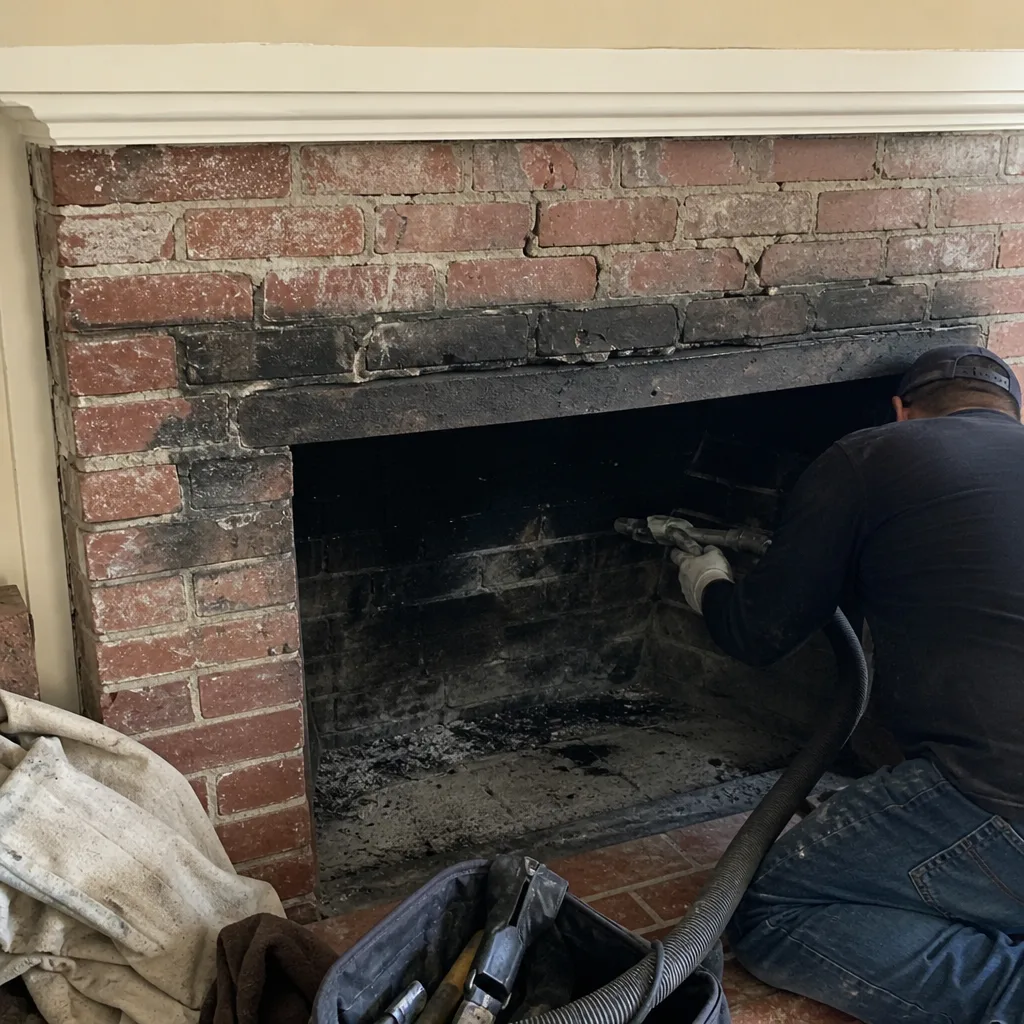 Before
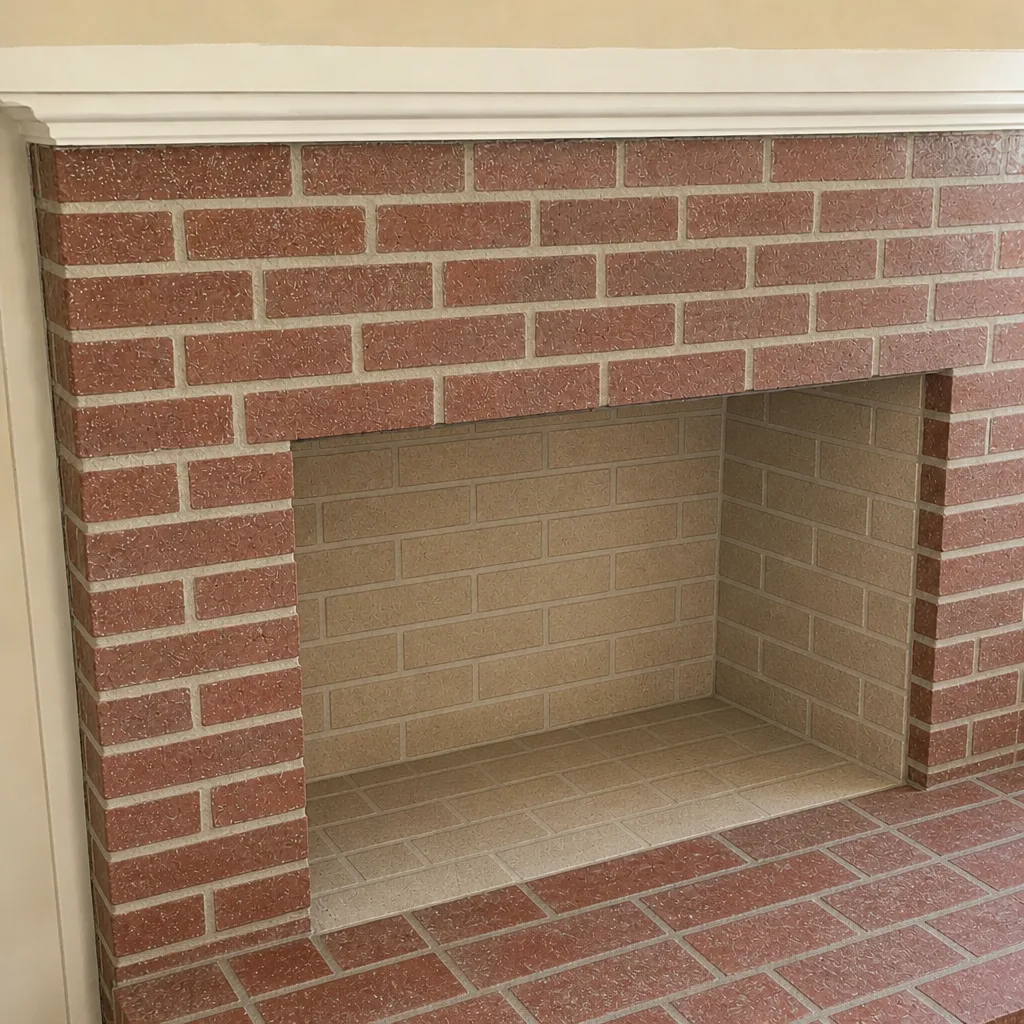 After
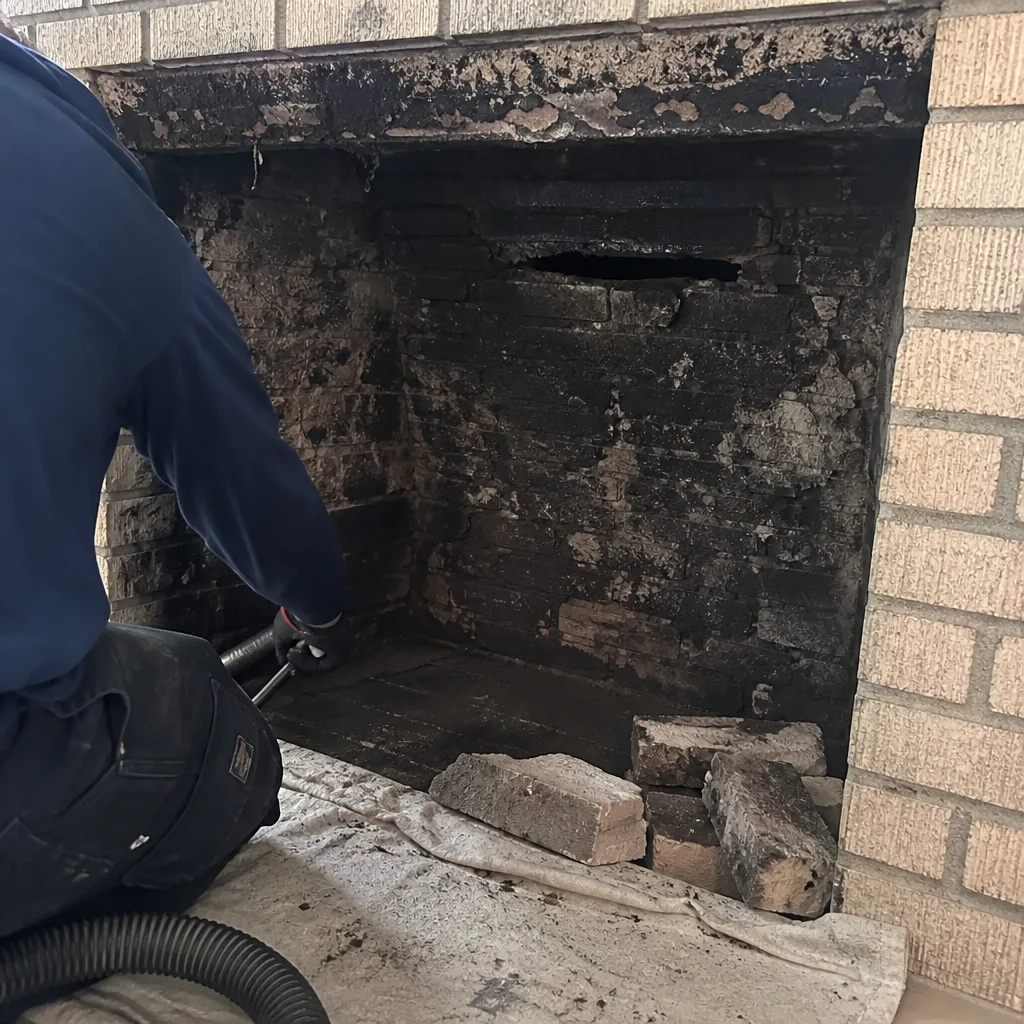 Before
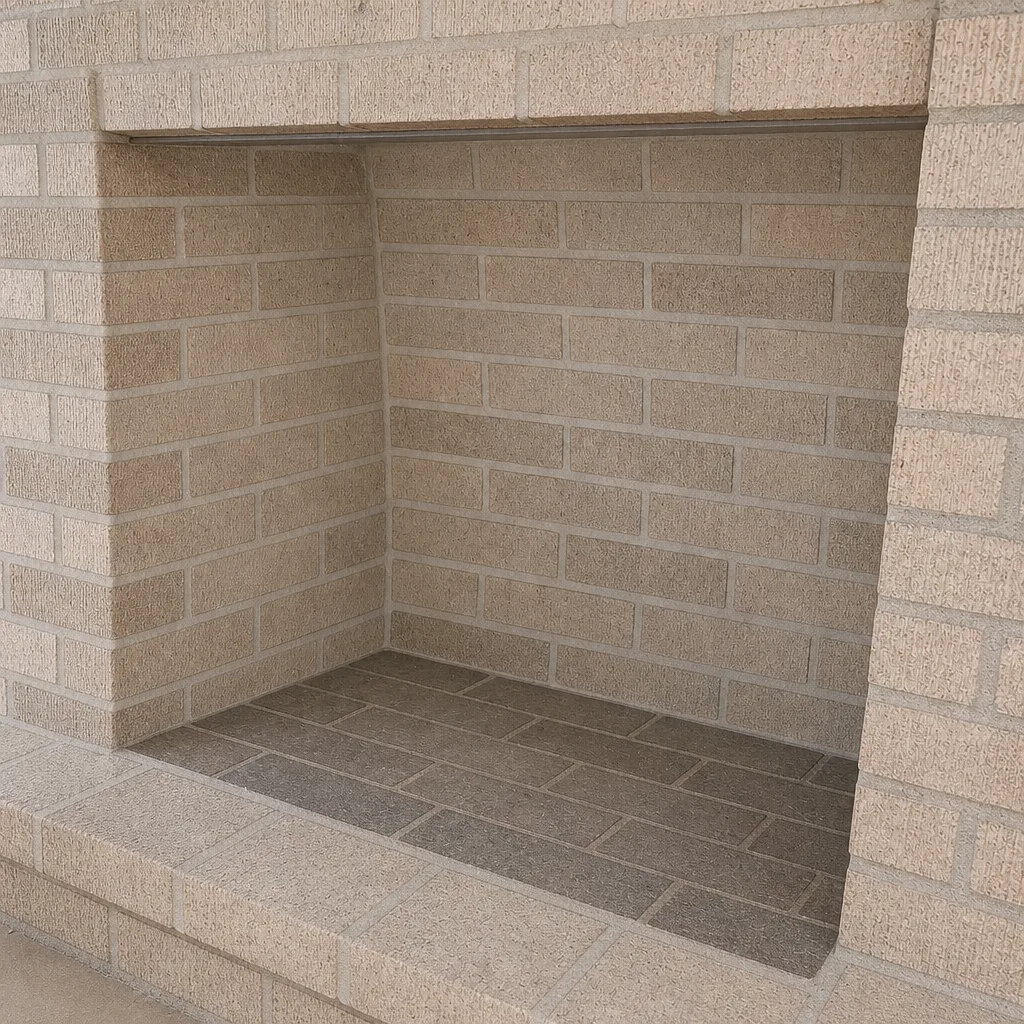 After
When to Call a Professional
Not every chimney needs a professional on the same day, but several situations call for one before the next fire. Call a professional if you smell a sharp, acrid odor from the firebox when the fireplace is cold. Call if smoke rolls back into the room rather than drawing up the flue, if you’ve had a fire that felt louder or hotter than usual, if you’ve noticed water staining or spalling on the exterior masonry, or if the home changed hands recently and the liner has never been camera-inspected. Call if the cap is loose, the crown is cracking, or the damper no longer seats. Call if the firebox panels in a zero-clearance unit are cracked. And call before relining or resurfacing is proposed without a camera inspection in front of you, because that’s work you shouldn’t approve blind. Chimney Sweep East Anaheim offers free estimates in East Anaheim. Call (833) 997-1267. We answer 24/7. Fast dispatch from 7am to 7pm, Sunday through Friday.
Frequently Asked Questions
Chimney cleaning in East Anaheim is priced per job from a written estimate rather than a flat fee, because the deposit type and flue construction vary so much from home to home. The estimate is free, and the written estimate sets the final price. Call (833) 997-1267 for an exact quote. Estimates are free.
Sweep based on what the inspection shows, not a fixed calendar. East Anaheim homes often fire their fireplace infrequently, so the case for cleaning depends on whether deposits have built up on the flue walls. A Level 1 inspection each year usually tells you whether a sweep is warranted. Call (833) 997-1267 to book an assessment. Estimates are free.
Only if the camera inspection shows the existing liner is cracked, separated, or so degraded it can’t safely contain the flue gases. A small, stable crack may not need replacement this season, and we’ll tell you when work can safely wait. If resurfacing with HeatShield or relining with a DuraFlex system fits, the camera footage will show you why. Call (833) 997-1267 so we can take a look. Estimates are free.
The main risks are creosote buildup that can feed a chimney fire and a liner that can’t contain the gases and heat, plus carbon monoxide that can leak into the living space if the flue is blocked or compromised. Low-use chimneys in a mild climate can also develop moisture damage to the liner that goes unnoticed. A quick inspection catches most of these before they turn into a bigger repair. Call (833) 997-1267 to schedule one. Estimates are free.
Yes, with HEPA-rated containment running the whole time. A professional system traps the fine ash at the source so it doesn’t circulate into the room, which is the main difference between a proper cleaning and a shop vac setup. We protect the hearth and floor area before any tool enters the flue. Call (833) 997-1267. We answer 24/7. Fast dispatch from 7am to 7pm, Sunday through Friday.
Sweeping removes deposits, while inspection tells you the condition of the liner, firebox, damper, crown, and cap. They’re not the same job, and the inspection is often the more valuable one on an East Anaheim chimney that gets light use. Our Chimney Sweep East Anaheim service runs both together so you get the diagnosis and the cleaning in one visit. Call (833) 997-1267. Estimates are free.
The Bottom Line
East Anaheim chimneys are shaped by three things: mild winters, light fireplace use, and a housing stock full of stucco exteriors and both masonry and zero-clearance fireplaces. Those conditions create sticky creosote and long stretches of humidity that wear on the liner, even in a chimney that rarely gets a fire. A thorough cleaning means the right brush for your flue type, HEPA containment for the air in your house, and a camera inspection to show you what’s really there. Get the inspection whether or not the chimney needs sweeping, and ask to see the footage before approving any repair. The written estimate is the price, and the aim is a chimney that’s built to last, not patched to pass. Call (833) 997-1267. We answer 24/7. Fast dispatch from 7am to 7pm, Sunday through Friday.
Written by the team at Chimney Sweep East Anaheim.